
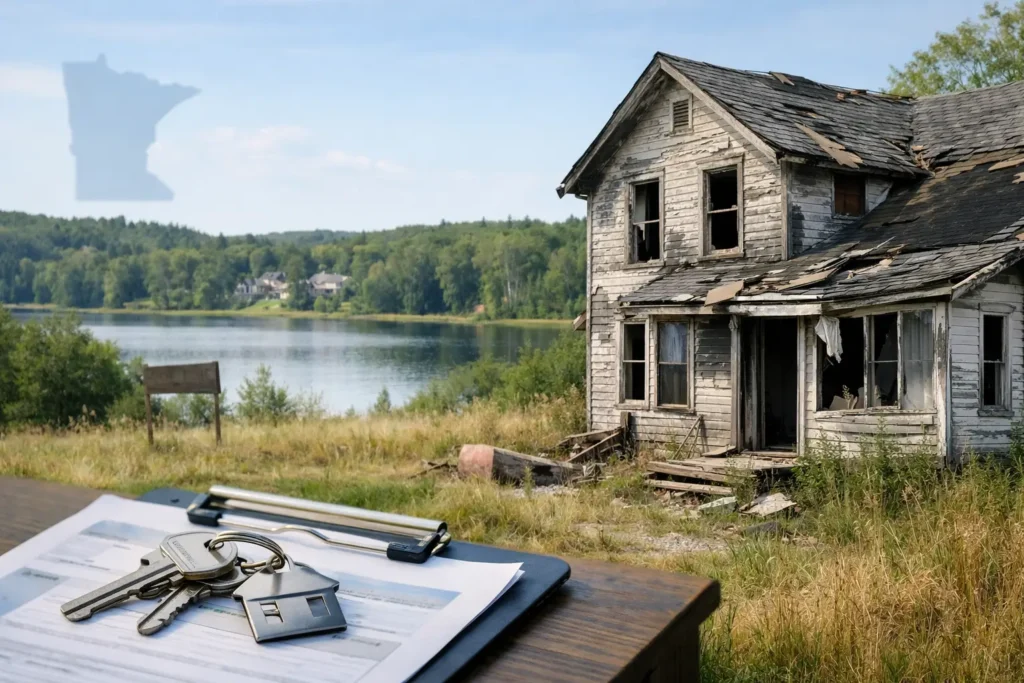
A distressed house in Minnesota rarely shows up as just a real estate problem. It usually arrives with missed payments, storm damage, inherited ownership, code letters from the city, tenant issues, probate questions, or a property that has simply fallen behind faster than the owner can catch up. This Minnesota distressed property guide is built for that reality – not just the sale itself, but the decisions around timing, repairs, financing, title, and compliance that shape the outcome.
What counts as a distressed property in Minnesota?
In practical terms, a distressed property is any home or building under financial, physical, legal, or operational pressure that limits normal sale or ownership options. Sometimes that means pre-foreclosure or delinquent mortgage payments. Other times it means major deferred maintenance, fire or water damage, condemned conditions, hoarding, probate, vacant property concerns, tax issues, or rental properties with problem tenants and city violations.
That range matters because not all distress is equal. A house with cosmetic neglect and clean title is very different from a duplex with code enforcement notices, unpermitted work, unpaid utilities, and an owner who needs a fast close. Both are distressed, but the strategy should not be the same.
In Minnesota, local conditions make this even more case-specific. City inspections, truth-in-housing requirements in some municipalities, rental licensing, occupancy standards, and permit history can all affect what happens next. A property in Minneapolis or Saint Paul may face a different compliance path than a home in Blaine, Shakopee, Rochester, or St. Cloud.
Minnesota distressed property guide for owners
If you own a distressed property, the first question is not always, “How do I sell it?” The better question is, “What problem am I really trying to solve?” For some owners, the goal is speed because payments are behind or the house is attracting fines. For others, the goal is preserving equity. Sometimes the property needs to be sold as-is. Sometimes it makes more sense to handle one or two targeted issues first because those fixes meaningfully widen the buyer pool.
That is where many owners lose value. They either spend too much on repairs that do not pay back, or they avoid all preparation when a modest cleanup, debris removal, or paperwork review could improve the result. Distressed property strategy is rarely all-or-nothing.
For example, if the home has aging mechanicals, peeling paint, and an outdated interior, a full renovation may not be necessary. But if there is an open permit, an insurance claim in progress, or a title issue tied to an inherited interest, those items can delay or derail closing. Fixing the wrong thing wastes money. Ignoring the right thing wastes time.
Owners should also understand the difference between a distressed sale and a desperate sale. Distress creates urgency, but urgency does not mean you should accept confusion. You still need to know the property condition, estimated market value in current condition, likely repair range, payoff amounts, tax status, title concerns, and whether a financed buyer is realistic.
Selling as-is versus making repairs
This is one of the most common pressure points in any Minnesota distressed property guide because the answer depends on the type of distress.
Selling as-is usually makes sense when the property has major deferred maintenance, the owner lacks funds to repair, the timeline is short, or the home would struggle to qualify for conventional financing. It can also make sense when the real issue is legal or operational rather than cosmetic – such as probate delays, inherited ownership disagreements, tenant complications, or municipal notices.
Making repairs may be worth considering when the problems are limited, the owner has the time and budget to manage the work, and the after-repair value clearly supports the investment. Even then, not every improvement is smart. Safety issues, active leaks, electrical hazards, and obvious inspection failures tend to matter more than design upgrades.
The trade-off is simple. Selling as-is often improves speed and certainty but may lower the price. Repairing can raise the price, but it increases carrying costs, contractor risk, permit questions, and timeline exposure. In a rising market, owners sometimes tolerate that risk. In a slower market, extra months of holding can erase the gain.
What buyers and investors need to watch closely
Distressed properties attract buyers because they can offer pricing flexibility, value-add potential, or long-term rental opportunity. But they also create the kind of hidden risk that can punish a rushed decision.
The first risk is assuming visible damage tells the whole story. It usually does not. Water stains may point to a roof issue, but they may also signal mold, insulation failure, plumbing leaks, or long-term structural deterioration. A missing furnace is obvious. A cracked sewer line is not.
The second risk is title and occupancy. Buyers should understand who legally owns the property, whether all heirs or vested parties are on board, whether there are judgments or liens, whether tenants remain in place, and whether there are city restrictions that affect transfer or occupancy. A cheap purchase price does not help if you cannot get clear title or lawful possession on the expected timeline.
The third risk is municipal compliance. In many Minnesota cities, distressed properties carry more than physical repair needs. They can come with inspection orders, rental license issues, vacant building registration, condemned status, or permit corrections. Investors who underwrite only materials and labor often miss the cost of compliance, delays, and reinspection.
That is why experienced buyers do not just ask, “What will it cost to fix?” They ask, “What will it take to close, legalize, insure, finance, and operate this property properly?”
Financing a distressed property is not always straightforward
A distressed home may not qualify for standard financing if it has safety hazards, missing systems, severe damage, or major livability issues. That affects both sellers and buyers.
For sellers, limited financing options can shrink the buyer pool. A home with broken windows, water damage, or nonfunctional mechanicals may attract mostly cash buyers or renovation-focused financing. That does not automatically mean the seller is stuck, but it does change negotiation leverage.
For buyers, financing needs to match the condition and the plan. Some purchases work best with cash. Others fit renovation financing, private lending, or a phased acquisition strategy. Investors also need to account for insurance limitations, reserve requirements, and the possibility that project timelines extend beyond original projections.
This is especially important for buyers trying to balance ethics, faith-based financial considerations, or long-term hold strategy. A lower purchase price can look appealing, but if the financing structure, rehab burden, or risk profile does not fit your broader goals, the deal may not be right.
Title, probate, and inherited property issues
Many distressed homes in Minnesota become distressed because ownership changed before the property plan did. A parent passes away, several heirs inherit the home, no one wants to fund repairs, taxes start building, and the property sits. By the time a sale is discussed, the house may also have title questions, deferred maintenance, and family disagreement.
These cases require patience and documentation. Before pricing or marketing makes sense, the parties often need clarity on who has authority to sell, whether probate is required, whether a personal representative has been appointed, and whether any liens or mortgages remain. If one heir has been occupying the home, there may also be condition, possession, or cleanup issues.
This is where a cross-functional approach adds value. Real estate decisions tied to title, estate administration, taxes, and occupancy should not be treated as a simple listing problem. The right next step may be coordination with title professionals, attorneys, or other advisors before the property is ever shown or sold.
When fast action matters most
There are moments when analysis should not turn into delay. If there is a pending foreclosure timeline, active city enforcement, utility shutoff risk, worsening structural damage, or a vacant property attracting break-ins, waiting usually gets more expensive.
Fast action does not mean careless action. It means gathering the key facts quickly, choosing a realistic strategy, and moving in a way that protects both time and equity as much as possible. In some cases, that means an as-is sale. In others, it means solving a title issue first or stabilizing the property enough to create better options.
For Minnesota owners, buyers, and investors, distressed property decisions work best when they are grounded in real numbers, local compliance awareness, and a clear understanding of the problem behind the property. Team Estates often sees the best outcomes when people stop guessing, get honest about constraints, and build a plan around what will actually close – not what sounds best in theory.
If you are dealing with a distressed property, clarity is usually the first win. Once you know the true condition, legal status, timeline pressure, and realistic exit paths, better decisions get a lot easier.